Dial-Up Dreams: The Quiet Rebellion of Hosting Your Website on Hardware That Should Be Dead
There's a website out there — you won't find it easily — that takes about forty-five seconds to fully load. Not because of a bad connection on your end. Not because of some runaway JavaScript plugin. It loads slowly because the person running it wants it to load slowly. The server is a repurposed Raspberry Pi sitting on a desk somewhere in Ohio, throttled on purpose, its bandwidth capped like a pet on a leash. The creator calls it "honest infrastructure."
This is not an isolated incident.
The Speed Gospel, and the People Ignoring It
For the last decade, the dominant religion of web development has been speed. Google baked page load time into its search rankings. Entire careers were built around shaving milliseconds off time-to-first-byte. CDNs — content delivery networks — became the standard expectation, spreading your site's assets across dozens of global servers so nobody ever has to wait more than a blink. The modern web is an obsessive optimization machine, and the metric it worships above almost everything else is how fast it gets out of your way.
Some people have decided that's the whole problem.
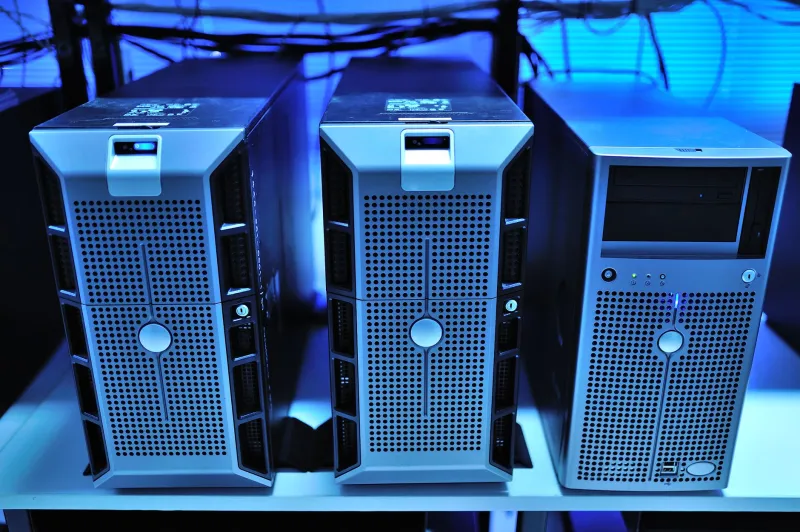
A loose, scattered community of developers, artists, and general internet weirdos has started making the opposite choice. Instead of spinning up a Cloudflare-backed, edge-cached, globally distributed deployment, they're hosting personal projects on ancient desktop towers running in their closets, or on single-board computers that cost thirty dollars, or on servers deliberately configured to throttle throughput to something resembling the early 2000s. The goal isn't nostalgia exactly — it's more like friction as philosophy.
What the Wait Is Actually Doing
Here's the thing about a slow website that nobody in the optimization conversation ever really talks about: waiting changes how you receive something.
When a page loads instantly, you're already mentally halfway to the next click. Your attention is primed for consumption, not contemplation. But when a site takes ten, twenty, thirty seconds to render — when you can actually watch the elements appear line by line like the page is being drawn in front of you — something different happens cognitively. You're present. You're committed. You made a choice to be there and the wait is the proof.
Creators in this space talk about this in terms that sound almost meditative. One developer who runs a personal writing site off a repurposed laptop in their Brooklyn apartment describes it as "making the reader earn the content a little bit." Not as a gatekeeping move, but as a way to filter for people who actually want to be there versus people who just stumbled in and would bounce in two seconds anyway.
The CDN Is Not Your Friend (According to Some People)
The philosophical argument goes deeper than just aesthetics. Modern hosting infrastructure is, at its core, a corporate product. Cloudflare, AWS, Vercel, Netlify — these are businesses with their own interests, their own data collection practices, their own points of failure and control. When your site runs through their systems, it's fast, yes. It's also dependent. It's surveilled. It's one terms-of-service violation away from disappearing.
Running your own janky server in your living room is, in a weird way, more sovereign. Nobody can pull the plug except you. Nobody is caching your visitors' IP addresses for their own analytics. The site might go down when your power flickers, but it's yours in a way that a Vercel deployment fundamentally isn't.
This argument resonates particularly with people who've watched platforms evaporate — who remember when Tumblr gutted itself, when Geocities went dark, when any number of "permanent" digital homes turned out to be rentals all along. Slow and self-hosted starts to look like a reasonable trade when the alternative is fast and fragile.
Aesthetic Latency
Beyond the political angle, there's something genuinely interesting happening visually and experientially with these slow sites. Because their creators know the load time is going to be long regardless, they often stop optimizing their content for the web's current conventions entirely. Images are huge and uncompressed. Fonts are weird. Layouts don't respond to mobile screens. The whole experience has a texture that modern web design has completely sanded away.
It's not unlike what happened with lo-fi music, or with film photographers who specifically seek out expired stock. The imperfection isn't incidental — it's load-bearing. It's doing aesthetic work that perfection can't do.
One designer who runs a portfolio on a server she describes as "basically a toaster with ambitions" says clients occasionally complain about the load time before they even look at her work. She considers this useful information. The ones who wait, she says, are the ones who get what she's doing.
The Signal in the Noise
There's a self-selection mechanic at play here that's worth sitting with. In an attention economy engineered to minimize every possible barrier to engagement, deliberately installing a barrier is a radical act. It's saying: this is not for everyone. It's saying: your time is yours, and so is mine, and if you want to be here you have to decide that.
The internet was not always a place optimized for mass consumption. Early web culture was full of friction — pages that took forever to load over dial-up, sites that only worked in specific browsers, communities that required you to find them before you could join them. That friction wasn't a bug. It created a kind of intentionality that the frictionless web has mostly lost.
The people hosting their sites on slow servers aren't just being contrarian, though some of them definitely are. They're trying to recreate something that got paved over in the race to scale. A sense that the digital space you're entering was made by a specific person for a specific reason, and that getting there required something from you.
Waiting as a Feature
None of this is going to become mainstream. The optimization gospel is too deeply embedded in how the commercial web functions, and most people — reasonably — don't want to wait forty-five seconds for a page to load. The slow server movement, if you can even call it that, will remain a niche thing, a strange signal from the edges.
But that might be exactly the point. The web's fringes have always been where the interesting experiments happen, where people try things that don't scale and don't care that they don't scale. The bandwidth wasteland these creators are deliberately inhabiting is, in its own weird way, one of the more honest places left online.
The page is still loading. Maybe that's fine. Maybe that's the whole message.