Proof of War: The Secret Screenshot Vaults We Build From Our Worst Fights
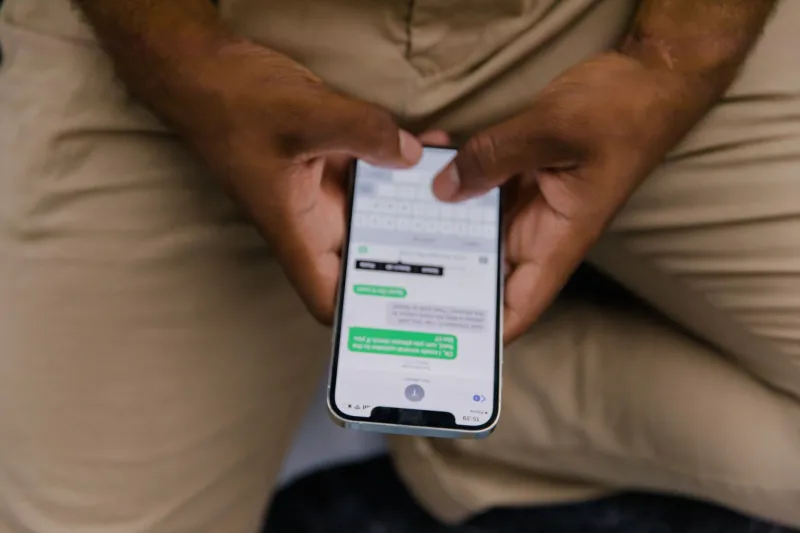
You said you were over it. You blocked the number, closed the tab, maybe even did one of those dramatic phone-face-down-on-the-counter moves that signal to nobody in particular that you're done. And then, before any of that, you took a screenshot.
It's sitting on your phone right now. A frozen argument. A comment thread that went sideways. A text exchange that ended something. You haven't opened it in four months. You're going to keep it forever.
Welcome to the rage quit archive — one of the least-discussed and most universally practiced forms of digital hoarding in existence.
The Folder Nobody Talks About
Ask around and people get cagey about this one. Unlike the broader phenomenon of saving memes or archiving old tweets out of nostalgia, screenshot-hoarding fights feels more private, more embarrassing. It implies you're still in it somehow, even when you've performed all the rituals of moving on.
But the data is pretty hard to ignore. Surveys on smartphone storage habits consistently show that "screenshots" rank among the most cluttered categories on people's devices, often second only to photos. And a significant portion of those aren't receipts or saved recipes. They're emotional artifacts — proof that something happened, that someone said something awful, that you were wronged or that you wronged someone else and couldn't quite let the evidence disappear.
Psychologists have a term for this general impulse: emotional record-keeping. Humans have always done it — saved letters, kept journals, held onto voicemails. The difference now is that the friction is basically zero. Screenshotting takes two button presses. There's no deliberate choice being made. The archive builds itself almost automatically, one bad night at a time.
Why We Need the Receipt
Part of what drives this is the nature of digital communication itself. Online arguments are slippery. People delete comments. They edit DMs. They backtrack and reframe and gaslight and then swear they never said what you both know they said. The screenshot is insurance against that particular kind of reality distortion.
There's something deeply American about this, actually — the idea that you need documentation to be believed, that your account of events isn't enough without the paper trail. We live in a culture that defaults to skepticism, where "do you have proof?" is practically a reflex. Of course we screenshot. Of course we hoard the receipts. We've been trained to.
But that only explains the initial capture. It doesn't explain why the files stick around for months, sometimes years, long after the dispute has faded or resolved or simply become irrelevant. The person who sent that nasty message might be dead to you now. The argument might have been about something so small you can barely reconstruct the stakes. The screenshot remains.
The Grudge as Artifact
Here's where it gets weird. There's a specific satisfaction in the existence of a screenshot that has nothing to do with ever actually looking at it. It functions more like a talisman than a document. Keeping it means keeping the option to be vindicated. Deleting it would feel, on some level, like conceding the argument — even an argument that's long over, even one that nobody else remembers.
This is the part that overlaps with what researchers call counterfactual thinking — running mental simulations of scenarios that never happened or might still happen. The screenshot feeds a fantasy where you get to show someone, someday, exactly what was said. Maybe it's an imagined conversation where you lay it all out. Maybe it's just the private satisfaction of knowing you could. The fantasy doesn't require the screenshot to ever leave your phone. It just requires the screenshot to exist.
There's also a grief component here that doesn't get acknowledged enough. A lot of these archives aren't really about anger at all — they're about loss. Fights that ended relationships. Last exchanges with people who are no longer in your life. The screenshot preserves not just evidence but presence. It's proof that someone existed in your world in a specific, charged way. Deleting it would mean something about finality that you're not ready to mean yet.
The Self-Sabotage Loop
Of course, keeping this stuff around isn't neutral. The archive has a way of pulling you back in. You're scrolling through your camera roll looking for a photo from last summer and suddenly there it is — the thread, the comment, the wall of text someone sent at 2am. The anger you thought was processed comes back online, fully formed, like it was waiting.
Therapists who work with clients on digital habits have started flagging this pattern specifically. The screenshot doesn't just preserve a memory — it keeps the emotional charge accessible in a way that natural forgetting would eventually dissolve. You can't accidentally stumble across a physical letter buried in a box at your parents' house. You can accidentally stumble across a screenshot while looking for a recipe you saved in 2022.
The archive is, in this sense, a form of low-grade self-sabotage. Not dramatic enough to notice most of the time. Just a slow background hum of unresolved stuff, organized into folders, waiting.
What the Hoard Actually Means
The rage quit archive tells you something about how we've come to understand digital permanence — which is to say, we've internalized the idea that the internet keeps everything, and we've started applying that logic to our own emotional lives. If servers remember everything, why shouldn't we? If nothing truly disappears online, why should our grievances?
But there's a contradiction built into this. We screenshot proof of our worst moments — the arguments we lost, the things we said in anger, the relationships that blew up publicly — and then we bury the files where we'll rarely look at them. We're not really revisiting the archive. We're just refusing to let it go.
Maybe that's the most honest thing about it. The screenshot isn't really for future use. It's not evidence you're going to present anywhere. It's a way of saying this happened to a version of yourself who might one day need to remember that it did. A private monument to a moment that hurt, kept alive in a folder you never open, on a phone you'll eventually replace, in a life that keeps moving whether you document it or not.
The archive stays. You stay. The argument is technically over.
Somewhere in your camera roll, the fight lives on.