Still Buzzing: The Weird Psychology of Notifications You Never Meant to Keep
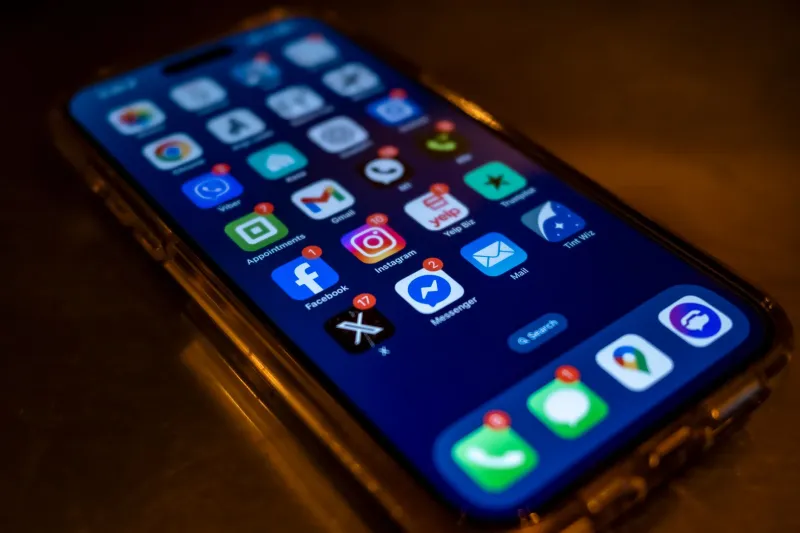
Somewhere on your phone right now, there is a notification you have been ignoring for months. Maybe longer. It is from a meal kit service you tried once during the pandemic, or a fitness app you downloaded with genuine enthusiasm on January 2nd of some year you'd rather not name. The service is still out there, still running, still under the impression that you are a customer. And for reasons that are genuinely hard to explain, you have never gone in and turned it off.
This is not a productivity failure. It is not laziness, exactly. It is something weirder — a kind of low-grade digital haunting that millions of Americans are quietly living with every single day.
The Notification You Keep But Never Open
Let's be honest about the math here. The average smartphone user in the US has somewhere north of 80 apps installed. A significant chunk of those apps are, by any reasonable definition, abandoned — opened fewer than once a month, maybe never. And yet the notification permissions stay on. The little badges accumulate. The Tuesday morning push from some defunct loyalty program keeps arriving like a postcard from a version of yourself you barely remember.
UX researcher Dana Cho, who studies habit formation in mobile interfaces, describes this as a form of passive digital retention. "Turning off notifications requires a decision," she explains. "And decisions cost cognitive energy. So people defer. Then they defer again. Eventually the notification just becomes part of the ambient noise of their phone, and the decision to act on it never quite feels urgent enough."
The apps, of course, know this. The entire notification permission architecture is built around the insight that once you say yes, the default human behavior is to never revisit that choice. Getting you to opt in is the hard part. Staying in your notification tray forever after is almost automatic.
Digital Guilt Has a Texture
But there is something else happening beyond pure inertia. Talk to people about their abandoned-app notifications and a specific emotional register starts showing up — something that sits between guilt and nostalgia, with a little ambient dread mixed in.
"I keep getting emails from this journaling app I used for like three weeks," says Marcus, a 34-year-old teacher in Columbus, Ohio. "Every time I see the notification I feel this little pang. Like I failed at something. But then I also don't want to unsubscribe because that feels like admitting I gave up."
That sentence — admitting I gave up — is doing a lot of work. The notification has become a symbol. Silencing it would be a small act of self-acknowledgment that the person you were trying to become, the one who journals every morning or cooks their own meals or runs three times a week, is not exactly who you turned out to be. Keeping the notification alive keeps the possibility alive. It is magical thinking in push notification form.
This connects to something psychologists call identity-protective cognition — the mental moves we make to preserve a flattering self-image. Deleting the app or turning off the notifications closes a door. Leaving them on means the door is technically still open, even if no one is walking through it.
The Companies Are in on It
It would be naive to think the services sending these notifications are unaware of this dynamic. Re-engagement campaigns — the marketing industry's cheerful term for contacting people who have stopped using a product — are a massive business. The emails with subject lines like "We miss you" and "It's been a while" are not written by accident. They are A/B tested, timed, and calibrated to hit exactly the nerve that Marcus described: the guilt nerve, the not-quite-ready-to-quit nerve.
Some of these campaigns are genuinely effective. Dormant users do reactivate. But a lot of the time, the notification just sits there, read or unread, serving a function the company probably did not intend: it becomes a strange comfort object, a recurring reminder that this version of yourself still technically exists somewhere in a database.
"There is a real intimacy to being contacted by something that remembers you," says Cho. "Even if it is a completely automated system, there is a part of the brain that registers it as social contact. You were thought of. Even if 'thought of' means an algorithm flagged your account as inactive and triggered a workflow."
The Unsubscribe Button as Existential Act
The unsubscribe process itself deserves some scrutiny here, because it is rarely as simple as it should be. Email unsubscribe flows can involve multiple clicks, confirmation screens, surveys asking why you are leaving, and occasionally the passive-aggressive option to "pause" emails instead of stopping them entirely. App notification settings are buried in menus that vary by operating system and app version. The friction is not accidental.
But even when the process is easy, people hesitate. "I went through a whole thing last year where I tried to clean up my subscriptions," says Priya, a 29-year-old designer in Austin. "I unsubscribed from like forty things. And honestly? It felt bad. Like I was dismantling some version of my life. Some of those services I hadn't used in years, but seeing them in my inbox felt like evidence that I had, at some point, been a person who tried things."
The inbox as archive. The notification as proof of life.
What We're Actually Holding Onto
There is a version of this story that is just about bad UX and dark patterns — companies making it hard to leave, users too busy to navigate the friction. That version is true, but it is not the whole picture.
The stranger, more interesting truth is that these digital ghosts serve a psychological function. They are relics of ambition, evidence of past selves, low-stakes connections to a life slightly differently lived. Keeping them costs almost nothing. Cutting them off requires a small confrontation with who you actually are versus who you once intended to be.
So the notification stays. Tuesday morning, it arrives. You glance at it, you feel the pang, you put the phone face-down.
The door stays open. Nobody walks through it. That is, apparently, exactly the point.