47 True Believers: The Quiet Power of Content Nobody Else Has Heard Of
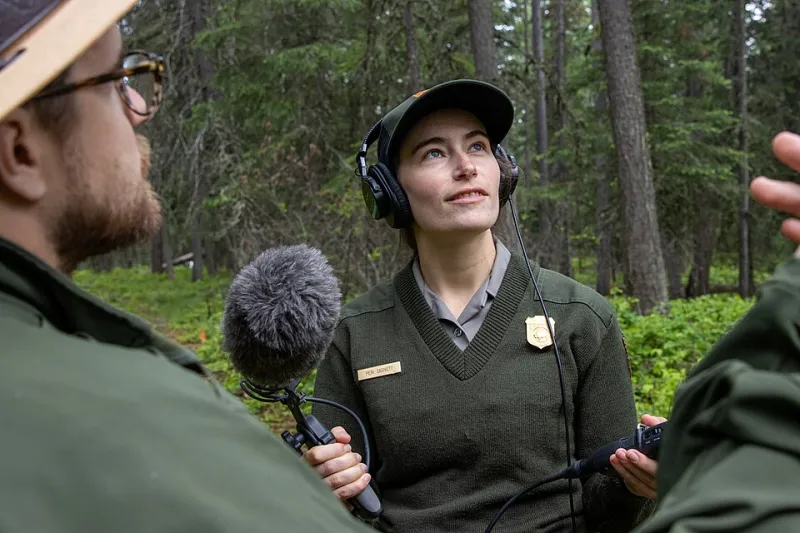
Photo: GlacierNPS, Public domain, via Wikimedia Commons
There's a podcast about the history of railroad dining car menus. There's a micro-blog dedicated entirely to the typography of regional grocery store signage. There's a newsletter that goes out every three weeks to 200 people who all care deeply about the acoustic properties of different concrete structures.
None of these will go viral. None of them are trying to.
And the people who make them — and, maybe more importantly, the people who follow them — might be onto something the rest of the internet hasn't quite figured out yet.
The Attention Economy Has a Texture Problem
The dominant logic of online content creation is scale. More followers, more streams, more reach. Platforms are designed around this logic. Algorithms reward it. The whole infrastructure of the creator economy assumes that the goal is audience growth, that bigger is better, that virality is the dream.
But there's a growing number of people operating completely outside that logic — not because they failed to crack it, but because they're not playing that game at all.
These are the hyper-niche creators. The ones with 47 podcast listeners, or 300 newsletter subscribers, or a Discord server with 80 members who have been there for three years and know each other's names. Their numbers would get them laughed off a creator monetization panel. Their engagement rates, in raw terms, are absurd. And the relationships they've built with their audiences are unlike almost anything else happening on the internet right now.
What Happens When There's No Algorithm
Most content discovery on the major platforms is mediated. An algorithm decides what surfaces, when, and for whom. This shapes not just what gets seen but what gets made — creators learn to optimize for the machine, and the machine shapes their output accordingly.
Hyper-niche content, especially the kind that lives on personal websites, small podcast feeds, or email newsletters, often exists entirely outside this system. There's no algorithm to game. Discovery happens through word of mouth, through obscure forum recommendations, through one person telling another person that this weird specific thing exists.
The result is an audience that found you on purpose. They weren't served your content. They went looking for it, or they trusted someone who pointed them toward it. That's a fundamentally different relationship from the one built on passive scrolling.
Psychologists who study parasocial relationships — the one-sided emotional bonds people form with media figures — note that intimacy of context matters. When you feel like you've discovered something, rather than been served it, your relationship to the creator shifts. You feel like you're in on something. You feel, in some small way, like a participant.
The 47-Listener Math
Here's a number worth sitting with: if a podcast has 47 listeners who are genuinely obsessed — who listen to every episode, who recommend it to friends, who would notice if it stopped — that's a different kind of asset than 50,000 casual streams.
The obsessed listener evangelizes. They bring in new obsessed listeners. They sustain the creator through dry spells because they're not fair-weather followers who showed up because an algorithm pushed a trending episode. They showed up because they care about the subject, and the creator, and the specific texture of the thing that's being made.
This is not a new observation in theory. But in practice, the creator economy still mostly rewards scale, which means a lot of hyper-niche creators are doing something genuinely countercultural just by continuing to exist.
Some of them have found ways to make it financially viable — Patreon, Ko-fi, paid newsletters, occasional merchandise for the truly devoted. Others are doing it with no economic logic whatsoever, just because the thing needs to exist and they're the person to make it. Both are interesting. The second kind is maybe more interesting.
What Intimacy Looks Like at Small Scale
There's a micro-blog — we're not linking it, because part of its charm is that you have to find it — that covers a very specific slice of American labor history. The person who writes it responds to every comment. Knows the regulars by username. Has inside jokes with the audience that stretch back years. Occasionally publishes posts that reference specific community members by name when they contribute something useful.
This is a different media experience than reading the New York Times, or watching a YouTube channel with a million subscribers, or following a podcast that advertises mattresses. The scale makes a different kind of relationship possible.
The creator knows their audience. Not in the aggregate, demographic sense — not as "25-to-34-year-olds interested in history" — but as actual individual people. And the audience knows the creator is aware of them. That mutual recognition does something to the dynamic.
It's closer to a conversation than a broadcast. Closer to a club than a publication.
The Fracture Lines in Media
All of this is happening against a backdrop of massive institutional media contraction. Local newspapers are gone or gutted. Magazine mastheads have been hollowed out. The mid-tier media infrastructure that used to cover niche subjects with actual resources has largely collapsed.
Into that vacuum, hyper-niche creators have moved — not as replacements for what was lost, but as something different. They're not trying to be publications. They're trying to be the most knowledgeable, most caring, most specific voice on a subject that they happen to love.
Sometimes that subject is regional food history. Sometimes it's a specific subgenre of electronic music. Sometimes it's the infrastructure of small American towns, or the design language of 1970s public signage, or the oral history of a single defunct professional sports franchise.
None of these are going to trend. All of them matter to someone.
Why This Feels Like the Signal
The internet right now is in a strange moment. The big platforms are increasingly homogenized, increasingly optimized, increasingly exhausting. The experience of being online — really online, in the exploratory sense — has gotten harder to find.
Hyper-niche content, with its tiny devoted audiences and its total indifference to algorithmic logic, is one of the places where something else is still happening. Where someone made a thing because the thing needed to exist, and found the specific people who needed it to exist too.
That's not a business model. It's barely a content strategy. But it might be the closest thing the current internet has to what the internet was supposed to feel like — strange signals from specific humans, finding each other in the noise.