Passwords to Nowhere: The Strange Comfort of Keeping Email Accounts You'll Never Open Again
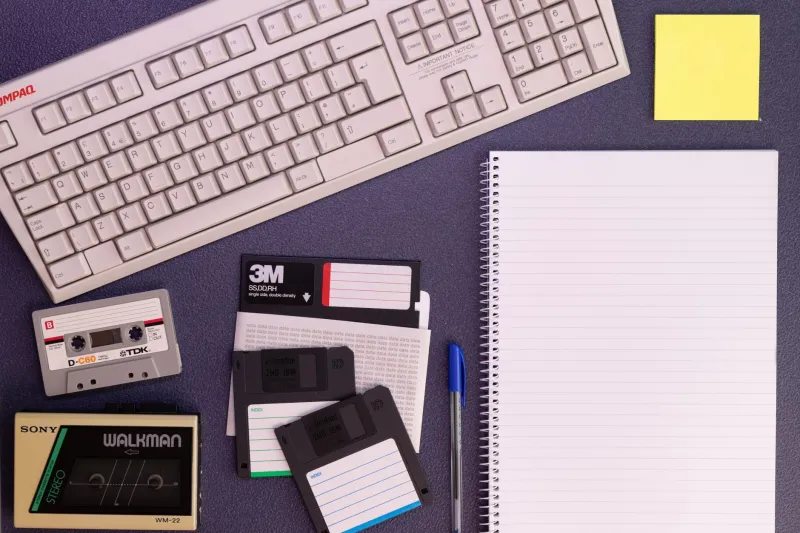
Somewhere in a notes app, a password manager, or a sticky note folded into a wallet that's slowly falling apart, there's a login. Username: something embarrassing, maybe a mashup of a favorite band and a birth year. Password: probably a pet's name with a capital letter and an exclamation point, back from the days when that was considered secure. The account it unlocks hasn't been opened since the Obama administration.
And yet — the login stays.
This is a phenomenon that doesn't have a clean name yet, but it's everywhere once you start looking. People holding onto dead email accounts like they're pressed flowers. Old AOL addresses, Hotmail inboxes, the Yahoo account that used to be the real one. Not because they need them. Not because anything important is still in there. But because deleting them feels like something else entirely.
The Digital Equivalent of a Storage Unit
Ask around and you'll find people who are almost sheepish about it. A woman in her late thirties in Ohio who still has the AIM screen name she made in seventh grade, linked to an email address she checks maybe once a year "just to see." A guy in Portland with four separate Gmail accounts spanning different eras of his adult life, each one a kind of time capsule — the one from his first job, the one from a relationship that ended badly, the one he made specifically for a project that never launched.
Psychologists who study hoarding behavior talk about the difficulty of discarding objects that carry emotional weight, even when the practical value is zero. Digital accounts work the same way, except they don't take up physical space, which makes the rationalization even easier. It costs nothing to keep an old Hotmail account alive in theory. So why get rid of it?
Except it does cost something. Just not in dollars.
What's Actually in There
The inbox archaeology alone is worth something. People who do occasionally log back into these old accounts describe the experience in almost hallucinatory terms — like finding a journal you forgot you kept. Emails from people who are no longer in your life. Confirmation receipts for purchases from stores that no longer exist. Newsletters from blogs that have long since gone dark. The whole texture of a previous version of yourself, preserved in amber.
One person described logging into a Hotmail account from 2004 and finding a chain of emails planning a road trip that actually happened. "It was like reading someone else's diary," they said. "Except it was mine. I remembered being that person but I couldn't quite access how it felt to be them. The emails kind of did that for me."
That's not nothing. That's actually a pretty profound use of what would otherwise be digital junk.
The Anxiety Underneath
But there's a darker current running under all of this, and it's worth naming. Part of what makes people reluctant to delete these accounts isn't nostalgia — it's a specific anxiety about permanence and identity that the internet has quietly installed in all of us.
We know, on some level, that the internet doesn't really forget. Old accounts can be searched. Old usernames can be traced. The version of you that posted on a forum in 2009 is still technically out there, indexed somewhere, attached to an email address you haven't thought about in years. Deleting the account doesn't erase the footprint. It just severs your access to it.
So there's a strange logic to keeping the login: as long as you have the password, you still have some claim to that identity. You can monitor it. You can control it, at least a little. Delete the account and that old version of you floats free, unmoored, belonging to the archive in a way you can't manage anymore.
It's control masquerading as sentimentality. Or maybe it's both at once.
The Credential Graveyard
There's a whole subculture — if you can call it that — of people who maintain what they half-jokingly call their "credential graveyards." Spreadsheets or notes files listing old usernames, passwords, and the platforms they belong to, some of which no longer exist. Myspace logins. Friendster, if you're old enough. Early Tumblr accounts made under pseudonyms. Accounts on forums that have since shut down.
The platforms are gone but the credentials remain, like keys to houses that burned down. There's something almost ritual about keeping them. A record of digital lives lived, platforms participated in, versions of yourself that existed in specific online contexts and nowhere else.
Some of these people do it out of genuine archival instinct — the same impulse that drives someone to scan old photos or save every letter they've ever received. Others are vaguer about it. They just can't bring themselves to delete the file. It feels wrong in a way they can't fully articulate.
When the Account Outlives the Person
The stakes get higher when you consider what happens to these accounts after death. Memorial pages on Facebook. Dormant Twitter accounts that still get birthday notifications from the platform's algorithm, long after the person who made them is gone. Families who can't access a loved one's email because the password died with them — or who can access it, and aren't sure they should.
The digital estate is a legal and emotional frontier that most of us are completely unprepared for. And the hoarding instinct — the refusal to fully close out an account, to consolidate, to simplify — makes it messier. Every old login is a potential complication for someone who comes after you.
But knowing that doesn't make it easier to delete anything.
Letting Go (Or Not)
There's no clean resolution here, which feels right. The people who hoard dead email accounts aren't doing anything harmful, exactly. They're doing something human — holding onto evidence that they existed, that they were someone specific in a specific time, that the past was real and can still be accessed if you have the right password.
The internet promised permanence and then delivered something stranger: a kind of permanence that belongs to the archive more than to you. Your old accounts persist, but they drift. They get absorbed into data sets. They become signals in someone else's algorithm.
Keeping the login is a way of pushing back against that drift. A small, slightly irrational insistence that you still have some say over who you were.
Maybe that's worth a sticky note in a wallet somewhere. Maybe that's worth the clutter.
The inbox will still be there when you're ready — or when you're not.