Save Everything, Trust Nothing: Inside the Compulsion to Hoard the Web Before It Disappears
There's a guy on a niche forum — one of those forums that still uses the visual language of 2008, with nested threads and tiny avatars — who has been archiving a dead Tumblr blog for three years. The blog belonged to someone he never met, who posted surrealist photography edits and long-winded personal essays that maybe thirty people read at the time. The blog went private in 2021. He'd already saved all of it.
He doesn't know why he did it. Or rather, he can't quite explain it in a way that sounds normal. "It felt like watching someone about to throw away a box of letters," he wrote in one thread. "I just grabbed them first."
This is the internet's shadow preservation movement — not the Wayback Machine, not official digital archives, not university libraries with servers humming in climate-controlled rooms. This is something stranger and more personal: ordinary people building private vaults for content the internet itself has decided isn't worth keeping.
The Algorithmic Bonfire
Here's the uncomfortable truth about the web in 2024: platforms are constantly burning things down. Not dramatically, not all at once, but in the slow, mundane way that a corporation trims costs. Old posts get de-indexed. Accounts get suspended. Servers get shut off when the startup runs out of runway. APIs get locked, breaking every third-party tool that was quietly stitching the web's memory together.
Twitter — now X, which feels like a rebranding specifically designed to help you forget the original existed — nuked years of embedded media when it changed its image hosting policies. Vine's entire catalog of short-form video culture evaporated in 2017. MySpace lost over 50 million songs to a botched server migration and called it an "unintentional server migration issue" in a statement that barely anyone read.
Every time this happens, there are people who saw it coming. Who had already downloaded everything. Who were, in some quiet corner of their apartment, running scripts and browser extensions and manual screenshot marathons for weeks before the lights went out.
Not Nostalgia. Something Else.
It's tempting to frame digital hoarding as nostalgia — as people clinging to an earlier, better-feeling internet. But spend enough time in the communities where this behavior clusters and that framing starts to feel too simple.
A lot of these preservationists are genuinely indifferent to the content they're saving. They're not saving things because they love them. They're saving things because the act of deletion feels like a small violence that nobody else is bothering to oppose. There's a philosophical edge to it — a refusal to accept that corporate infrastructure gets to decide what's historically significant.
"Historians don't get to choose what's important until later," one Reddit user explained in a thread about archiving obscure gaming forums. "But by the time they decide it matters, it's already gone. So someone has to be irrational about it now."
That word — irrational — comes up a lot. The people doing this are frequently self-aware about the compulsive quality of the behavior. They know that a 400-page thread about a mid-tier MMO's economy from 2013 is probably not the kind of thing future scholars will be desperate to access. They're doing it anyway.
The Ethics Nobody Wants to Talk About
Here's where it gets genuinely uncomfortable: a lot of this preservation happens without permission.
When someone makes their Instagram private, they're making a choice about who gets to see their content. When a blogger takes down old posts, they're exercising control over their own archive. Digital preservationists often override those choices — not with malice, but with a kind of paternalistic certainty that the content is worth more than the creator's decision to let it go.
This is a real tension and it doesn't have a clean resolution. The web is full of people who have, at various points in their lives, posted things they later wanted gone — coming-out posts from before they were ready, political opinions that evolved, personal essays written in the raw middle of something painful. The right to be forgotten is a meaningful right, and it's one that personal hard drives full of scraped content quietly violate.
Some preservationists draw their own lines. They'll save public-facing cultural artifacts — memes, forum discussions, widely-shared posts — but won't archive personal blogs or anything that feels too intimate. Others have no lines at all, operating on a "if it was public once, it's fair game" logic that conveniently sidesteps the messier human questions.
Neither approach is fully satisfying. The ethics here are genuinely murky, and anyone who tells you otherwise is probably not thinking hard enough about it.
The Bunker Aesthetic
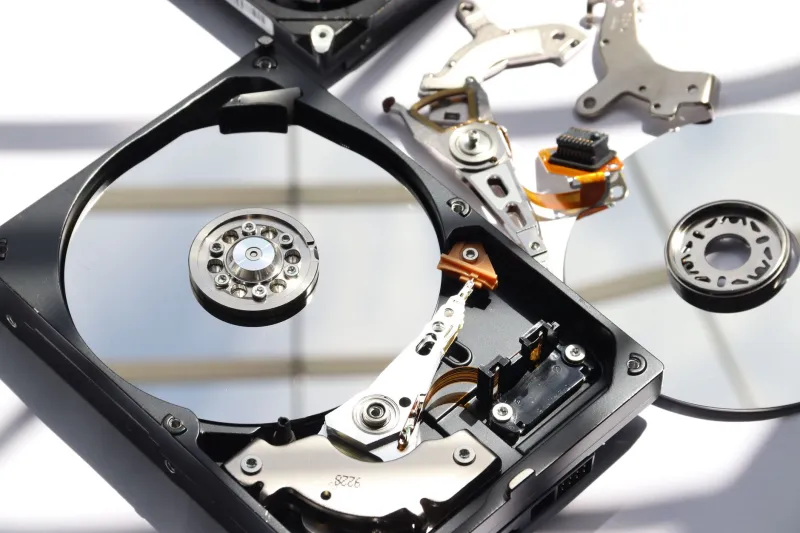
What's interesting is how these personal archives get organized — or don't. Some hoarders are meticulous, building elaborate folder hierarchies and tagging systems that would make a librarian emotional. Others have external hard drives that are essentially digital landfills: 4TB of screenshots, HTML files, downloaded videos, and exported JSON data with no organizational logic whatsoever.
Both types describe a similar feeling when they look at what they've built. Something between pride and unease. The archive is proof that something existed. It's also a weight.
"I have stuff on drives I haven't looked at in six years," one person wrote in a Discord server dedicated to web preservation. "I don't know exactly what's on them. But I know it's there, and that matters to me. Even if I never open it again."
That's not really about information retrieval. That's something closer to grief management.
The Longest Receipt
There's a version of this story that ends with a grand statement about collective memory and the responsibility of digital citizens. But that's probably too tidy.
The truth is that most of this archiving will never matter in any measurable way. The Tumblr blog saved by the guy on the forum will sit on his drives until the drives fail, and then it'll be gone anyway, just delayed by a decade. Most of what's being hoarded is genuinely, functionally unimportant — the internet's equivalent of a grocery receipt from 2011.
And yet. There's something worth sitting with in the impulse itself. In a digital environment designed to keep you moving forward, to keep refreshing, to keep consuming the new thing — the act of stopping and saying wait, I want to keep this is a small, weird, quietly radical gesture.
The web is always telling you to forget. These people just refuse.
Maybe that's irrational. Maybe that's exactly the point.