Still Online After All These Years: A Field Guide to the Internet's Undead Corners
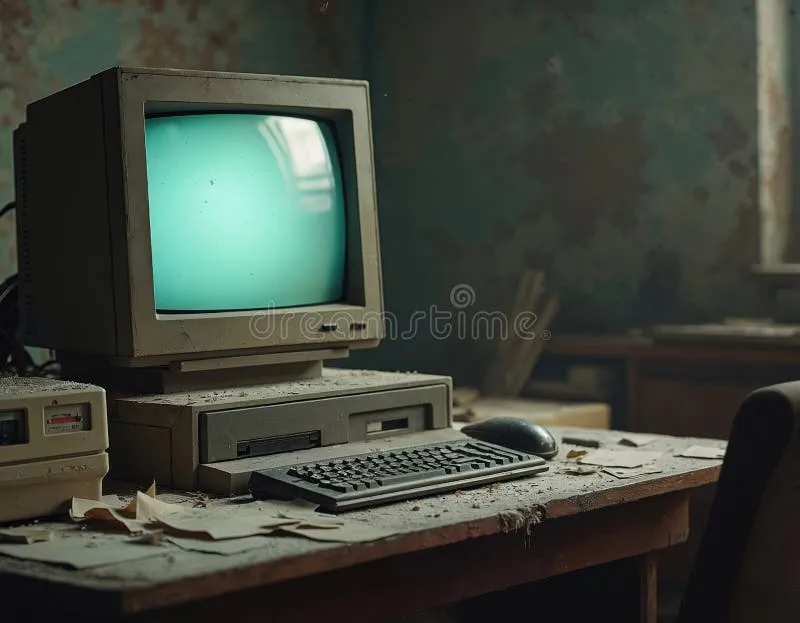
Photo: old abandoned computer monitor glowing in dark dusty room retro, via thumbs.dreamstime.com
The domain registration is still active. The last forum post is dated eleven years ago. Someone named Dragonlord_77 asked a question about a video game that no longer exists on a platform that no longer matters, and nobody ever answered. The thread is still there. It will probably still be there when you read this.
This is a story about the parts of the internet that forgot to die.
The Persistence Problem
We tend to think about the internet as an ephemeral thing — content disappearing, platforms pivoting, links rotting into 404 errors. And that's true, mostly. The web is genuinely bad at preservation in ways that frustrate historians and archivists constantly. But there's a parallel phenomenon that gets less attention: the weird durability of certain digital spaces long after their cultural moment has passed.
Abandoned forums. Defunct e-commerce sites still technically accepting orders for products that don't exist. Early-2000s personal homepages with broken image tags and working guestbooks. Flash game portals frozen in 2008 like digital amber. These things persist not because anyone is tending to them but because deletion requires intention, and intention requires someone to care enough to act.
In the physical world, abandonment leads to decay. Buildings rot. Paper degrades. But digital abandonment is different — absent active deletion or server shutdown, old code just... sits there. Quietly broadcasting to nobody. The lights are on because nobody turned them off.
What You Actually Find Out There
If you know where to look — and communities of internet archaeologists absolutely do — the landscape is genuinely strange.
There are fan communities built around media properties that were cancelled before most current internet users were born, still maintaining wikis with the dedication of archivists preserving ancient manuscripts. There are tech support forums where people are still posting questions in 2024 about software that was discontinued in 2011, and occasionally — this is the part that gets you — someone still answers.
There's a particular category of abandoned site that draws the most attention from the people who hunt these things: the personal homepage. Pre-social-media, people built their own little web presences from scratch. HTML tables, tiled backgrounds, MIDI files that played automatically. These sites were intensely personal in a way that modern social media profiles aren't — they were someone's actual creative space, not a product of a platform's design decisions. When the person moved on and stopped paying attention, the site stayed. You can still read someone's thoughts about their favorite band from 1999, written with complete sincerity, in a web aesthetic that looks like a fever dream to modern eyes.
Some of these people are still alive. Some have become completely different people. The site doesn't know.
The Communities That Haunt Dead Spaces
Here's where it gets genuinely interesting: some of these spaces aren't just persisting passively. They're being actively haunted.
Not by the original communities — those are long gone. But by a specific kind of internet user who's drawn to the atmosphere of digital ruins. Forum spelunkers. Nostalgia tourists. People who find something meaningful in the texture of old web design and the particular loneliness of a space that used to be full of people.
Some of this is documented in the Wayback Machine's comment sections and in subreddits dedicated to "lostwave" and forgotten internet content. There's a whole ecosystem of people who treat the early web the way urban explorers treat abandoned buildings — with a mix of reverence, curiosity, and something that functions like grief for places they never actually inhabited.
Kelsey, a 31-year-old from Portland who describes herself as an "internet archaeologist" in the most literal sense she can manage, spends a meaningful amount of her free time documenting defunct websites before they finally disappear. "There's a specific sadness to a guestbook that still works," she told us. "Like, I could sign it. I could leave a message for someone who will never read it. That's a weird kind of power to have."
She has, in fact, signed a few. Just to leave a trace.
Why They Refuse to Disappear
The technical reasons are less interesting than the human ones, but they're worth understanding. Domain names cost maybe $12 a year to maintain. Hosting can be even cheaper, especially for static sites that don't require server-side processing. For a lot of these sites, the reason they're still up is simply that the auto-renewal on the domain is still hitting a credit card that hasn't been cancelled, attached to an email address nobody checks. The infrastructure of persistence is almost embarrassingly mundane.
But then there are the deliberate preservations. The Internet Archive's Wayback Machine is the most famous, but there are smaller, weirder efforts. Fan communities that mirror old sites before they disappear. People who download entire defunct forums because they can't bear the thought of those conversations being gone. Digital historians who argue — convincingly — that the early web represents a cultural artifact as significant as any physical archive, and that we're losing it faster than we're saving it.
There's also a corporate layer to this. Companies that acquired old web properties sometimes just... leave them running indefinitely because the cost of maintaining a static site is lower than the cost of dealing with whatever legal and logistical complications come with formal shutdown. The result is a weird class of zombie corporate web presence — technically alive, completely unattended, still ranking in search results for queries that matter to nobody.
What the Ruins Are Telling Us
Digital ruins are different from physical ones in a way that matters philosophically. When a building decays, it becomes something new — a habitat, a hazard, a piece of land with a story. When a website persists past its useful life, it becomes something closer to a recording. It's not decaying into something new. It's just... frozen. A perfect preservation of a moment that the rest of the world moved past.
That freeze creates a specific kind of melancholy. You can read what people cared about in 2003 — what they were excited about, what they were arguing about, what they thought mattered enough to put on the public internet — and feel the distance between that world and this one in a way that's genuinely affecting. The old web was weirder, more personal, less optimized. It had a texture that the current web, for all its sophistication, largely doesn't.
There's also something to sit with about memory and ownership. Who does an abandoned website belong to? The person who made it and forgot about it? The people who used to gather there? The archivists who preserved it? The strangers who wander through now, treating it like a historical site?
Utrang's whole thing is signals from the digital fringe, and this is one of the clearest ones: the internet doesn't forget the way we expect it to. It forgets unevenly, in patches, leaving some things perfectly preserved while others vanish without a trace. The ruins that persist aren't the most important things that ever existed online. They're just the things that nobody got around to deleting.
Dragonlord_77's question is still out there. Still unanswered. The thread is still open.
You could reply if you wanted.