Dead Letters: The People Digging Fonts Out of the Internet's Dumpster
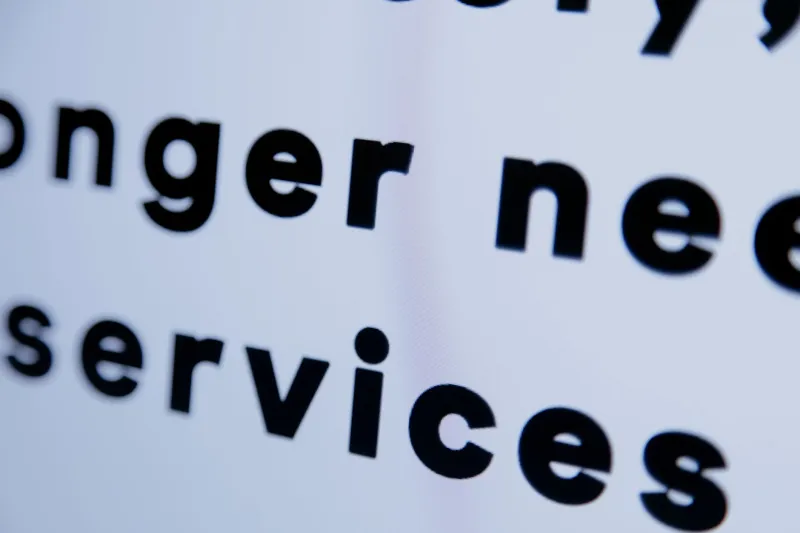
There's a specific kind of grief that comes with opening a thirty-year-old piece of software and watching the UI render in a typeface you've never seen before and will probably never find again. It's not a dramatic grief. It's quiet. It's the feeling of realizing something existed — something someone made with real intention — and the world just kind of forgot about it.
That feeling has become a calling for a loose, scattered community of designers, digital archivists, and obsessive hobbyists who spend their free time hunting down defunct typefaces from dead software packages, shuttered design studios, and the dusty corners of CD-ROM collections. They call what they do a lot of different things. Preservation. Rescue. Archaeology. But really, what it looks like from the outside is someone carefully lifting a body out of a ditch and asking, "wait, who was this person?"
The Typeface as Time Capsule
Fonts are weird artifacts. They're not quite art and not quite tools — they exist somewhere in between, doing invisible work that you only notice when something goes wrong. A font shapes how a message feels without ever announcing itself. And because of that invisibility, the people who made them often got very little recognition even when they were alive and working.
When a design studio closes or a software company goes under, the typefaces they commissioned or developed don't always make it into any archive. They were proprietary. They were internal. They were created for one specific product in one specific year and nobody thought to preserve them because nobody thought they'd matter later.
Except they do matter. They matter because every typeface is a decision someone made — about weight, about spacing, about what legibility should feel like in a given moment. Those decisions are data. They're a record of aesthetic values from a specific time and place, and when the font disappears, that record goes with it.
Who's Actually Doing This
The community doesn't have a clean headquarters. It lives in Discord servers, Reddit threads, niche forums, and the comment sections of very specific blog posts that haven't been updated since 2017. Some of the most dedicated hunters are professional type designers who got curious about a gap in the historical record. Some are just people who found an old piece of shareware and got sucked in.
What they share is a tolerance for tedium that borders on meditative. Tracking down an abandoned font can mean emailing people who haven't thought about their old job in fifteen years. It can mean ripping assets from disk images, running obsolete operating systems in emulators just to capture a screenshot, or cross-referencing specimen sheets from print catalogs that were never digitized. There are people who have spent months on a single typeface, trying to determine whether it was original or just a modified version of something that already existed.
The wins, when they happen, feel disproportionately significant. Someone posts a reconstructed specimen sheet and the thread lights up. People who've never met each other start comparing notes. The font gets documented, gets named if it didn't have a name, gets uploaded somewhere it can actually be found.
The Ethics Get Complicated Fast
Here's where it gets murky: a lot of these fonts are technically still owned by someone. The studio closed, but the IP didn't evaporate. It might have been sold, inherited, or just left in legal limbo because nobody thought it was worth the paperwork. Distributing a rescued font, even one that's been out of circulation for decades and hasn't generated a cent for anyone in years, is legally gray at best.
Most of the community operates on a kind of informal honor system. Fonts get documented. Specimens get shared. Full distributable files sometimes circulate privately. Nobody's trying to monetize anything — the goal is just preservation, the same logic that drives people to rip old video games or scan out-of-print books. The fact that it might technically be infringement is something people acknowledge and then quietly set aside, because the alternative is that the thing disappears entirely.
Some foundries have started to engage with this in good faith. There are cases where a designer's estate got contacted by a preservation community and ended up releasing the font properly, grateful that anyone remembered it existed. Those stories are the ones that get passed around as proof that the whole project is worth something.
What a Font Carries
The part that's hard to explain to people who haven't gotten pulled into this is why any of it matters emotionally. It's letters. It's spacing. It's a technical file that tells a computer how to draw shapes.
But spend enough time in this community and you start to understand what's actually being rescued. For a lot of the typefaces these people are hunting, the font is the only surviving evidence that a particular designer existed professionally. No portfolio website. No social media presence. No archived interviews. Just this one set of letterforms that somehow made it into a piece of software that shipped in 1993 and then vanished.
Finding that font and documenting it is the closest thing to recovering a ghost that digital archaeology allows. You can't recover the designer's voice or their personality or their other work. But you can look at the way they handled a capital G or the particular rhythm of their descenders and know: someone was here. Someone thought about this.
There's something almost spiritual about that, even if the people doing the work would probably be embarrassed to say so out loud.
The Signals That Almost Didn't Make It
Utrang has always been interested in the stuff that almost didn't survive — the signals from the edges of the internet that barely registered before they started fading. Abandoned fonts fit that pattern almost perfectly. They're not famous enough to be missed publicly. They're not valuable enough to be protected. They exist in a zone where the only thing keeping them alive is the specific attention of a small number of people who decided, for reasons that are hard to fully articulate, that letting them go felt wrong.
That's a weird thing to care about. But the internet is full of weird things people care about, and most of them turn out to be load-bearing in ways nobody anticipated. The fonts that almost got lost are part of the visual language of the early digital era. They shaped how millions of people read and processed information during a formative period in computing history.
Somebody should probably know what they were called.
Somebody is working on it.